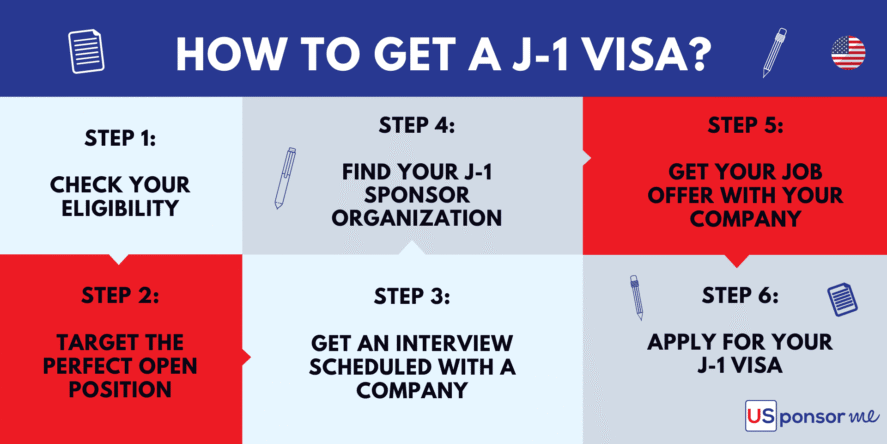
Obtaining a J-1 visa of the Intern or Trainee category requires working with a designated sponsor organization. Sponsors are authorized entities that issue the DS-2019 form, which is required to apply for a J-1 visa. They are also responsible for monitoring participants and ensuring compliance with program regulations throughout their stay in the United States.
Both the participant and the host company must follow the rules established under the J-1 program.
What Makes J-1 Sponsors Different?
Although all sponsors serve the same legal function (issuing the DS-2019 form), their services and processes can vary significantly. When comparing sponsors, the following factors are particularly important:
Country of operation
Some sponsors or partner agencies operate only in specific countries, which may limit eligibility based on where the participant resides.
Industry coverage
Certain sponsors specialize in fields such as hospitality or culinary training, while others focus on STEM, business, or a broader range of industries.
Operating model
Some sponsors work directly with applicants, while others collaborate with partner agencies that assist candidates throughout the process.
Level of support
Support can range from basic compliance (reviewing documents and issuing forms) to more hands-on guidance, including assistance with application preparation and structuring the required materials, such as the DS-7002 training plan. These differences often depend on whether you work directly with a designated sponsor or through a partner agency, which offers different levels of support.
Processing time
Timelines for reviewing applications and issuing the DS-2019 form vary across organizations.
Eligibility criteria
Sponsors may differ in their requirements related to age, education, professional experience, and host company qualifications.
Costs and fees
While pricing is generally within a similar range, fee structures and included services can differ.
Common Services Across Sponsors and Agencies
Most sponsors and partner agencies provide the following core services:
- Issuance of the DS-2019 form
- Pre-departure guidance
- Monitoring and compliance throughout the program
- Ongoing support during the stay
- Health insurance coverage for the program duration
Comparison of Selected Sponsors and Agencies
This comparison is for an 18-month J-1 Trainee Program:
DS-2019 Providers | Model | DS-7002 Writing | Application Prep | Timeline | J1 Program Cost* | On-site Visit Cost |
J1X | Designated Sponsor | ✅ | ❌ | ~2 weeks | ~$4,090 | $250 |
Authorized Agency | ✅ | ✅ | 2 – 3 weeks | ~$4,096 | $0 | |
Parenthèse Paris | Authorized Agency | ❌ | ✅ | ~3 weeks | ~$4,910 | $0 |
Cultural Vistas | Designated Sponsor | ❌ | ❌ | 4 – 6 weeks | ~$4,015 | $300 |
What Is Included in J1 Program Costs?*
To ensure full transparency, the estimates above are based on publicly available pricing from each provider’s website, and typically include:
- Processing or program fees
- Health insurance (usually calculated monthly)
- SEVIS fee (Student and Exchange Visitor Information System)
J1X
- Processing fee: $1,495
- Health insurance: $125 × 19 months
- SEVIS fee: $220
👉 Total: ~$4,090
USponsorMe
- Processing fee: $1,995
- Health insurance: $99 × 19 months
- SEVIS fee: $220
👉 Total: ~$4,096
Parenthèse Paris
- All-inclusive pricing (program + insurance + SEVIS)
👉 Total: ~$4,910
Cultural Vistas
- Processing fee: $1,895
- Health insurance: $100 × 19 months
- SEVIS fee: $220
👉 Total: ~$4,015
General takeaway: Most programs fall within a range of approximately $4,000 to $5,000, depending on the level of service and included benefits.
What J1 Program Costs Do Not Include
Participants should plan for additional expenses, which may include:
- $185 MRV visa application fee (paid to the U.S. embassy or consulate)
- Placement services (if a host company has not yet been secured)
- J-2 dependent processing and insurance costs
- Expedited processing fees (if applicable)
How to Choose the Right Sponsor or Agency
Selecting the right organization depends on your situation. Consider the following questions:
- Do you already have a host company, or do you need assistance finding one?
- Does the sponsor/agency support your industry or field of training?
- Do you meet the sponsor/agency requirement on your age, education, experience, and company qualifications?
- Does the sponsor/agency operate in your country of residence?
- What level of support do you need during the application process?
- Will you be traveling with dependents (J-2), and what are the associated costs?
Researching these points can help you identify the option that best fits your needs.
Sponsor vs. Agency: What’s the Difference?
Designated sponsors are officially authorized by the U.S. Department of State to issue the DS-2019 form and ensure regulatory compliance. Some sponsors work directly with applicants, typically offering standardized services focused on document review and program monitoring.
Partner agencies work with designated sponsors and may provide additional support, such as:
- Guidance throughout the application process in the language of the participant
- Assistance with preparing documents, including the DS-7002 training plan
- Communication with the sponsor on behalf of the participant
- Ongoing support as a primary point of contact
In some cases, agencies also offer placement services for candidates who have not yet secured a host company.
Choosing between the two depends largely on how much guidance you need. Applicants who are comfortable managing the process independently may work directly with a sponsor, while those seeking more structured support in their native language may prefer working with an agency.
Which option is right for you?